
The Cuban Dream, the Cuban Nightmare
After a week in Havana, the gap between the romantic idea of Cuba and the country itself has never seemed wider

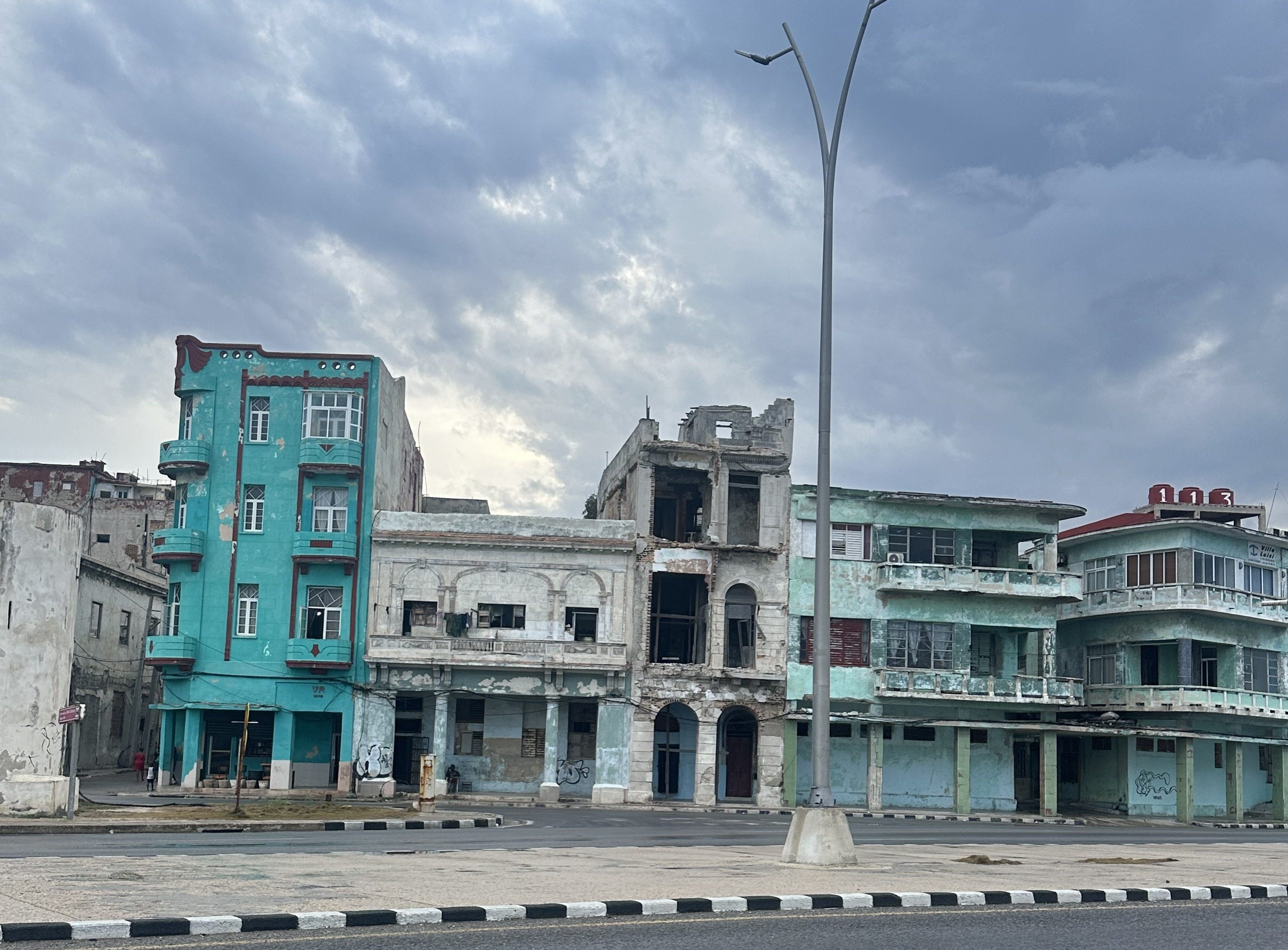
I spent last week in Havana. I’ve written a couple of pieces on what I saw—snippets of conversations, and (hopefully) some details that rarely make it into conventional articles. You can read my previous two entries here and here.
In this piece I’ll try to bring some of it all together. This piece is free to read, but some of my dispatches are only available to paid subscribers. If you’d like to support my work, you can upgrade here.
The city of Havana stinks. Melting polyethylene. Smouldering cardboard. Blackened beer cans bobbing on a sea of tiered ruffles of ash and cinders. Cubans are well-versed in the art of Resolver—getting by, making do, solving problems creatively in conditions of scarcity. One of the most important tenets of this philosophy today is the ability to hold one’s breath—to retain a clean pocket of air in the lungs as one passes a heap of burning trash.
Last month President Miguel Díaz-Canel told a visiting group of foreign supporters that Cubans were a people “who prefer to die standing than living on their knees.” This is less heroic than it sounds. In recent weeks, rubbish has piled up in parts of Havana that the authorities can no longer reliably service. If Habaneros are on their knees, one reason is to escape the rancid smell of the garbage the state has decided to burn instead of collect.
Of course, the visiting delegation saw little of this reality. The smell does not reach the upper floors of the luxury hotels where Jeremy Corbyn, Hasan Piker and Pablo Iglesias were holed up during their short trip to the island. Nor, judging by the Potemkin photos they posted to social media, did their government guides show them around those parts of town. That would have broken the spell. It’s an a priori requirement to ignore such things. “A revolution is not a bed of roses,” as Fidel Castro once proclaimed. But it can look remarkably comfortable from a kip of Egyptian cotton with air conditioning, en suite and a panoramic view of Havana.
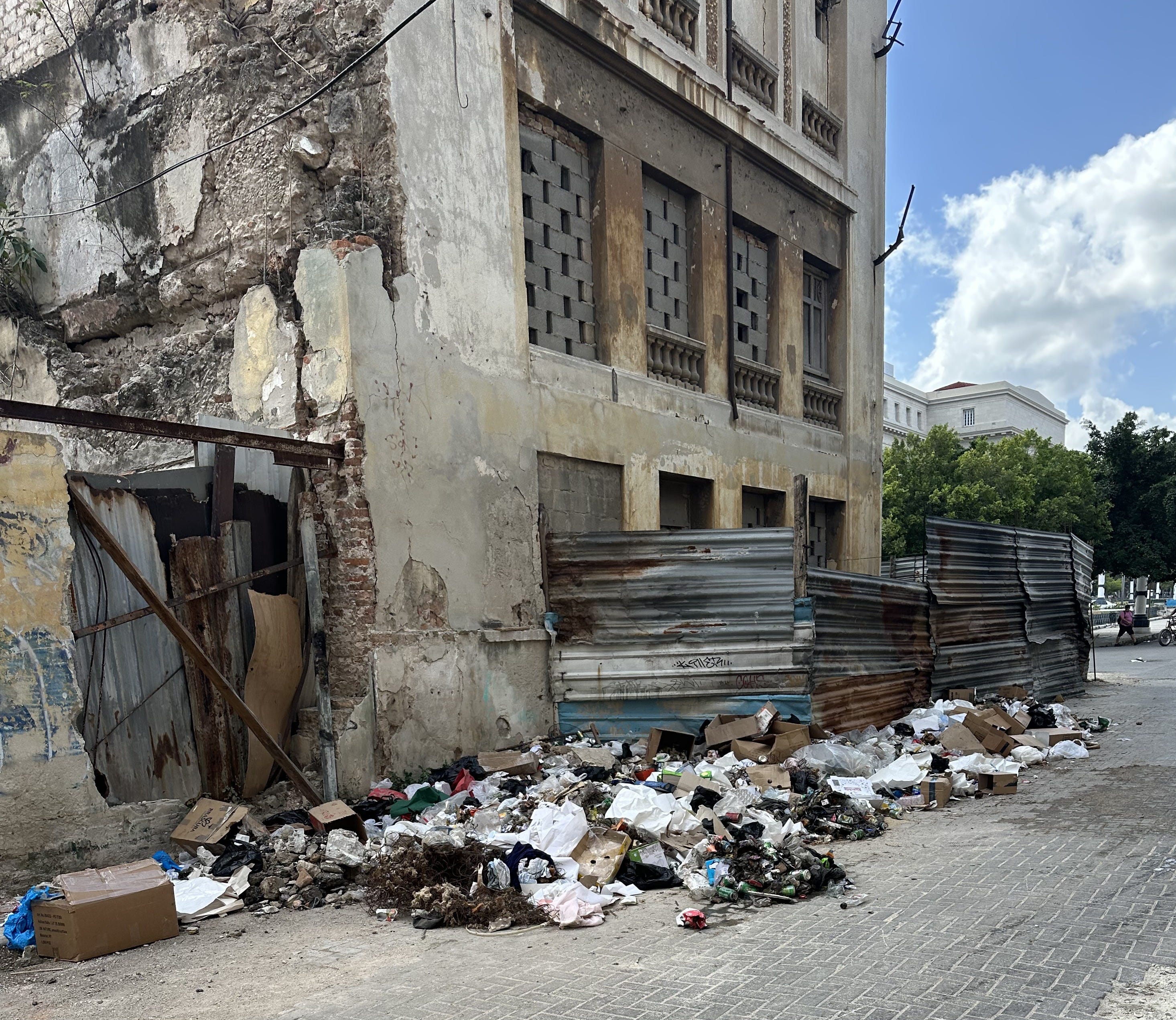
Nobody in their right mind wants to be around extreme poverty. And least of all as an interloper from the other side. The pleading faces stripped of dignity. The sunken eyes that bore into you. The men and women lingering in the dark behind beaten doors. The broken bodies—bodies which, like the country’s electrical grid, are slowly shutting down. The distance between you is too great. You may as well be a visitor from outer space. You are seen as an instrument, a means to an end—or worse, an almsgiver. That was what Castro created: a leviathan that decides who eats and who doesn’t, who is sent to labour in the fields, who gets a car and who has to make do with a push bike, who sinks and who swims. Castro is dead and the state which sprang up in his monomaniacal image is on its last legs. Outsiders are all that’s left—interlopers who arrive in button-down shirts and pistachio shorts. Can I spare 500 Cuban Pesos? Sure I can—take it. But then the next person wants another handout. And the next, and so on.
The ruling class promised an omelette. They broke a lot of eggs, spilled much of the yolk, yet still their half-starved subjects wait for dinner to be served. Meanwhile the cooks have locked themselves in the kitchen—octogenarians, nonagenarians, ghosts of the past. In the end, bolting the door shut is the only way to save themselves: to avoid being held accountable for someone else’s blood, someone else’s sacrifice.
New luxury hotels are constantly going up in Havana. Most of them lie empty, their corridors silent. Government spending on the vaunted healthcare system is just 2 per cent while spending on tourism (controlled by the military conglomerate GAESA) is more than 30 per cent. Most visitors have now deserted the island. The shops in Havana Vieja (Old Havana), which once did a brisk business selling olive green caps and Che Guevara trinkets to the nostalgists—Cuba’s very own heritage industry—cut a mournful figure. The foreign visitors who once made their unspoken pact with Marxism-Leninism are gone for the most part (a few grizzled sex tourists still lurk around San Rafael Boulevard looking to score a young Cubanita).
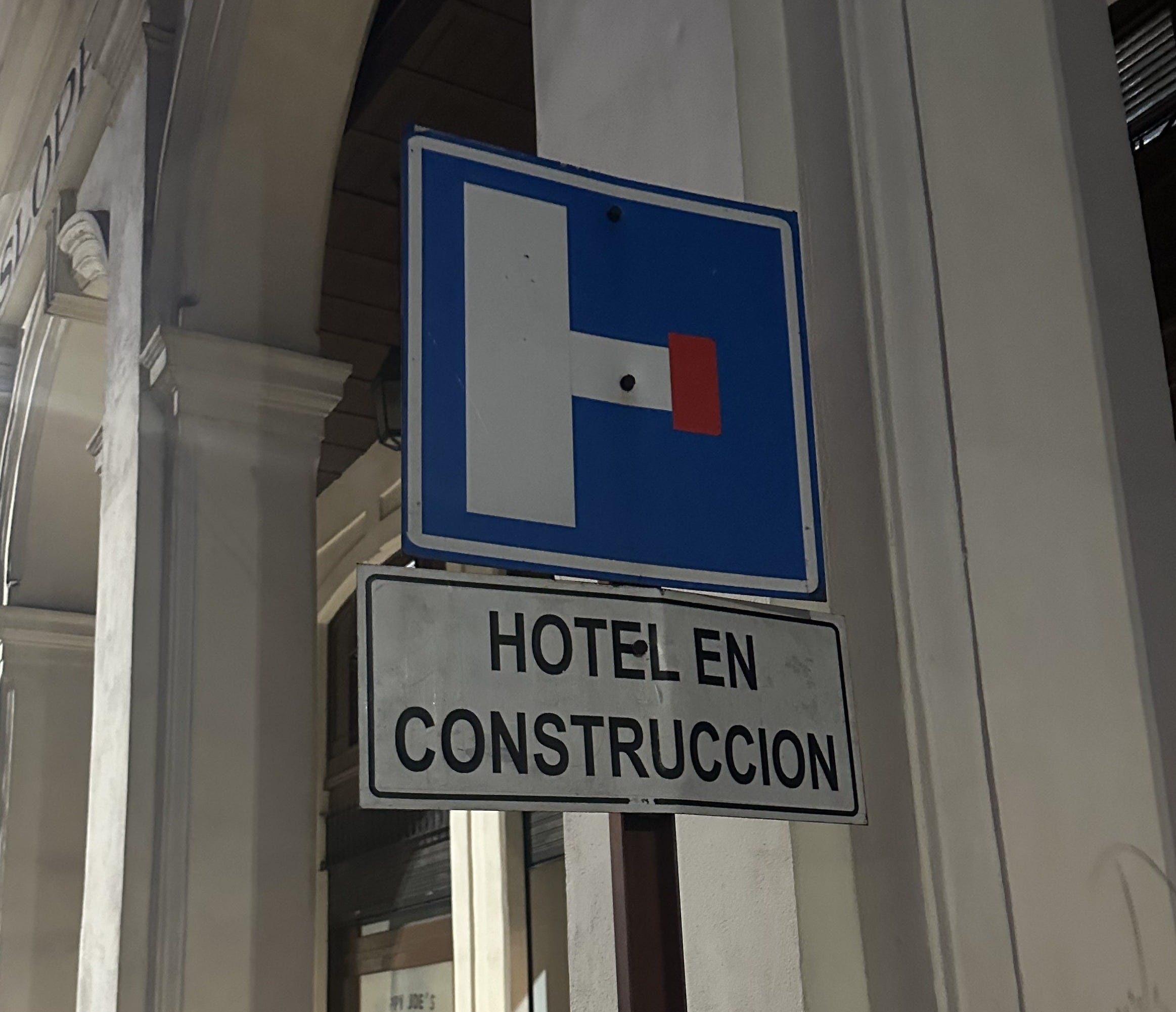
Why build more of them then?
It’s worth considering the enormous transfer of assets that took place when the Soviet Union collapsed. Those who controlled the factories, the raw materials, the weapons controlled the future. Political commissars became business executives. The nomenklatura reinvented themselves as businessmen, entrepreneurs and, in some cases, gangsters. Once the signal had been given from above, the pretence that such property belonged to the people could finally be dropped. As the architect of Russian “shock therapy” Yegor Gaidar would later admit, the nomenklatura acted to “change the facade of the decrepit system, to legalise property relations that had formed spontaneously within the system and to build (or to bring to the surface) out of the shadows the edifice of nomenklatura state capitalism.” “It followed the scent of property as a predator pursues its prey.”
Despite the bombastic and fiery rhetoric, the Cuban elite is preparing for every eventuality. They have long allowed themselves to enter into capitalist relations with European hotel chains, even while the population was being encouraged to die for their ideals. Newer and emptier hotels may thus be seen as a land grab: a way for the military to hedge their bets by locking down the country’s prime real estate ahead of all eventualities.
Gorbachev has been a cautionary tale for Leninists ever since he inadvertently collapsed the system they revered. Castro despised him. Moscow had once paid more than 11 times the world price for Cuban sugar; by 1989 that had fallen to “just” three times the world price. In the summer of that year, shortly after Gorbachev’s visit to the island, Cuba executed one of its leading generals, Arnaldo Ochoa, following a summary trial. The popular former head of the Cuban army in Angola, Ochoa was accused of being involved in drug trafficking. According to well-informed accounts, he probably was (with the approval of the Cuban leadership). But many suspected he was liquidated due to his popularity and desire to bring Gorbachev-style reforms to Cuba. If Fidel said you were guilty then you were guilty, whether or not you had committed the specific acts. The proceedings, which were televised, had the character of a show trial from Stalin-era Russia. Shortly prior to his execution by firing squad, Ochoa declared to the court that “If I receive this sentence, which might be execution… my last thought will be of Fidel, for the great revolution he has given our people.”
The spectacle was intended as a warning to others in the military—many of whom had studied and trained in the Soviet Union—that the Russian spring would not be coming to Cuba: a pretext for blowing a man’s brains out.
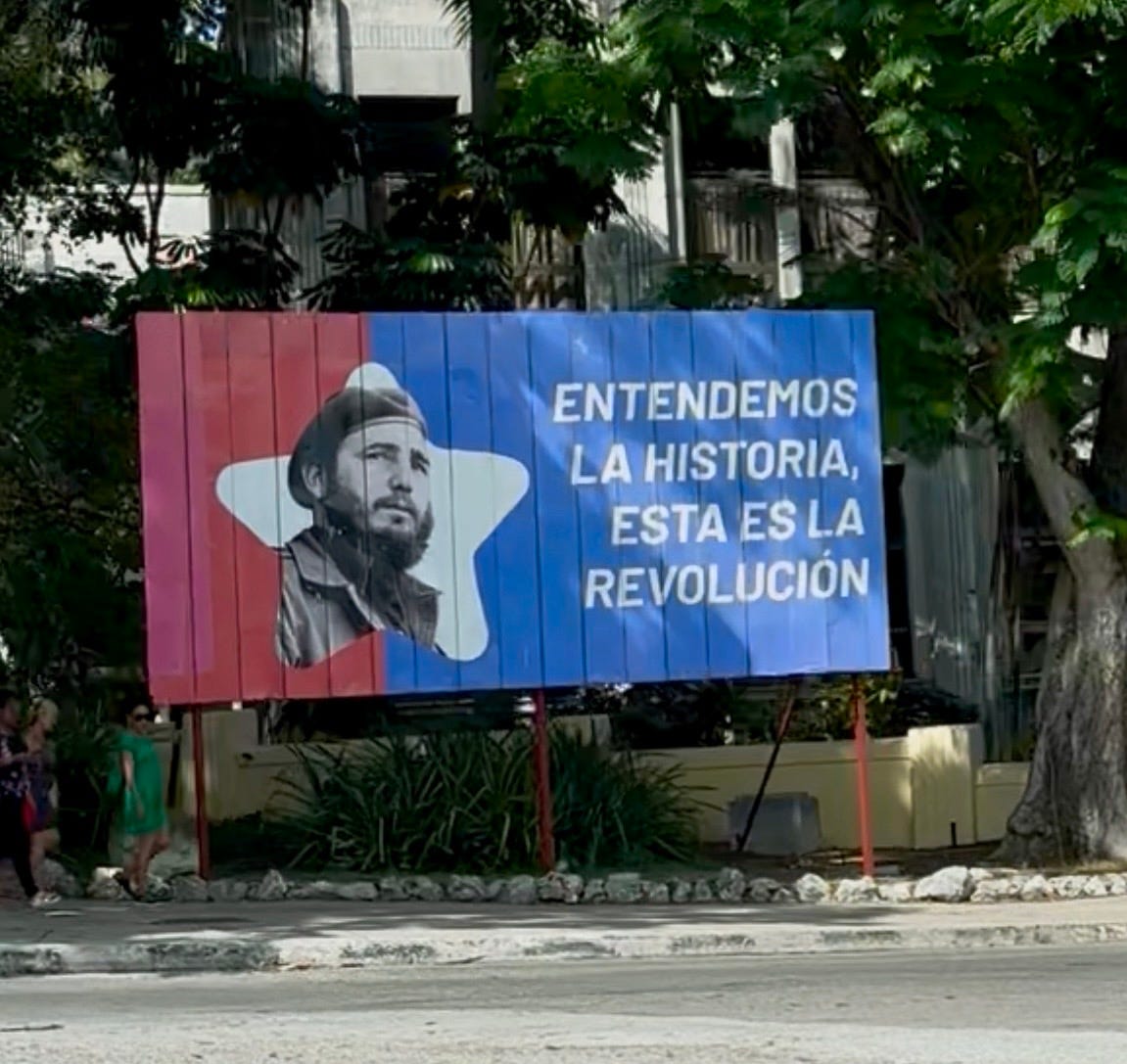
While Gorbachev liberalised, Castro centralised. Many Soviet publications were subsequently banned in Cuba. The parting of ways found expression in the “Rectification of Errors” campaign adopted in 1986, whereby Cuba eliminated the private farmers’ markets that since 1968 had allowed producers to sell their surplus at market prices. Everything would henceforth have to go through the state. The Cuban elite was unwilling to relinquish control of the island’s economy and—by extension—its political levers. Notably, the announcement of the rectification campaign came shortly after a state visit by Castro to North Korea, courtesy of the country’s “Eternal Leader” Kim Il Sung, during which he was supposedly impressed by the totalitarian regime’s state-run work facilities. Work in Cuba would henceforth become a “patriotic duty”—or as the slogans above the entrances to the labour camps for homosexuals set up in the 1960s had once told inmates, “work will make you men.”
Should a conflagration with the United States occur, the Cuban government will invariably attempt to rally the population behind hot words and theatrical gestures. Sovereignty. Self-determination. Revolution. Resistance. Patria o Muerte! (homeland or death)—all of it subordinated to a familiar message: don’t think for yourself, simply accept the authority of others. The audience must be kept away from the stage.
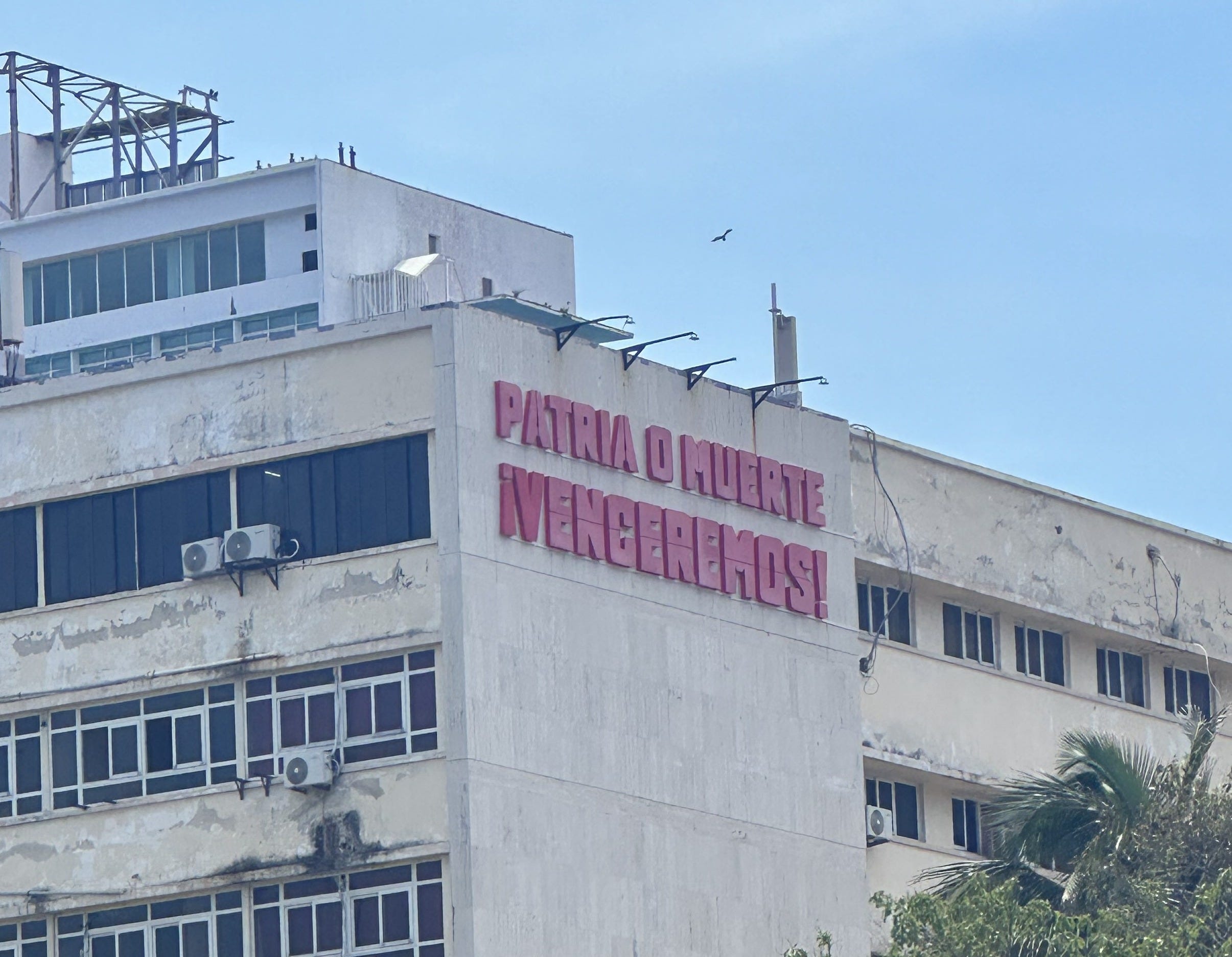
But what sovereignty do the Cuban people presently enjoy? We can agree that the United States has no right to meddle in Cuba’s internal affairs. But do the Cuban people have that right, or is it the preserve of an ageing politburo that no longer even pretends to know how to solve Cuba’s myriad problems? Regardless of one’s views on the historical neighbour to the north, this seems to me the elementary point. So many years of sacrifice—and for what? To step over garbage and swerve buildings that might collapse on you? It was the Romanian writer Panait Istrati who came up with the best riposte to Castroism and its predecessors: “All right, I can see the broken eggs. Where’s this omelette of yours?” The Cuban people have had enough of omelette makers.
For Cubans, the god that failed has become a nightmare from which they fear they will never wake. It is somebody else’s dream: a gerontocracy of military officers and western leftists trapped in a time capsule of their own manufacture. The dream of those who sleep in air-conditioned rooms under white cotton sheets. Dreams come to an end, but so must nightmares.
During my last day in Havana I spoke to a sixty-something road sweeper resting on a wooden stool under a palm tree, its branches brushing his face like slim green swords. He offered me a cigarette and ran through a familiar list of complaints as we smoked thin, filterless cigarettes. He had no soap at home. A pound of rice cost 300 pesos on the black market. We did the usual tentative dance, trying to bridge our separate realities: the Cuba he inhabited and the one I had briefly entered.
What about the blockade, I asked.
“We Cubans live under a double blockade,” he said. “The one in the north and the one imposed by the government here.”
Cuba really did stand for something, the street sweeper added with a wry smile. It stood for not paying people. When I asked what he wanted for his country, he lowered his voice. “Patria y vida,” he said, echoing the forbidden slogan of the 2021 protesters—homeland and life.
You can also buy my book Lost Boys here.
Revolución o muerte, valga la redundancia...
Great article, as usual. Thank you
Good article. I recently went to Cuba and came to the conclusion that its severe problems are 100% the fault of the regime and 0% the fault of the US embargo. The reason for this is that the root cause of the problem is the fact that Cuba has been a tyranny since 1 January 1959 and its people have been deprived of a say in whether they want to have an ultra-hostile attitude to the US or not. The pro regime propaganda emitted by leftists such as Chomsky for the last 67 years overlooks or excuses the fact that it is a tyranny. These leftists make a point of never under any circumstances speaking to people on the ground: their theories would not survive a 2 minute conversation with a so-called ordinary person!